
Most records were designed for one body: blood pressure, weight, a single column. In an ophthalmologist’s consulting room that grates all day long. Right eye, left eye, both eyes: not as an afterthought, but as the way you look.
OD, OU and OS are not an extra field. They are how every measurement section is built.
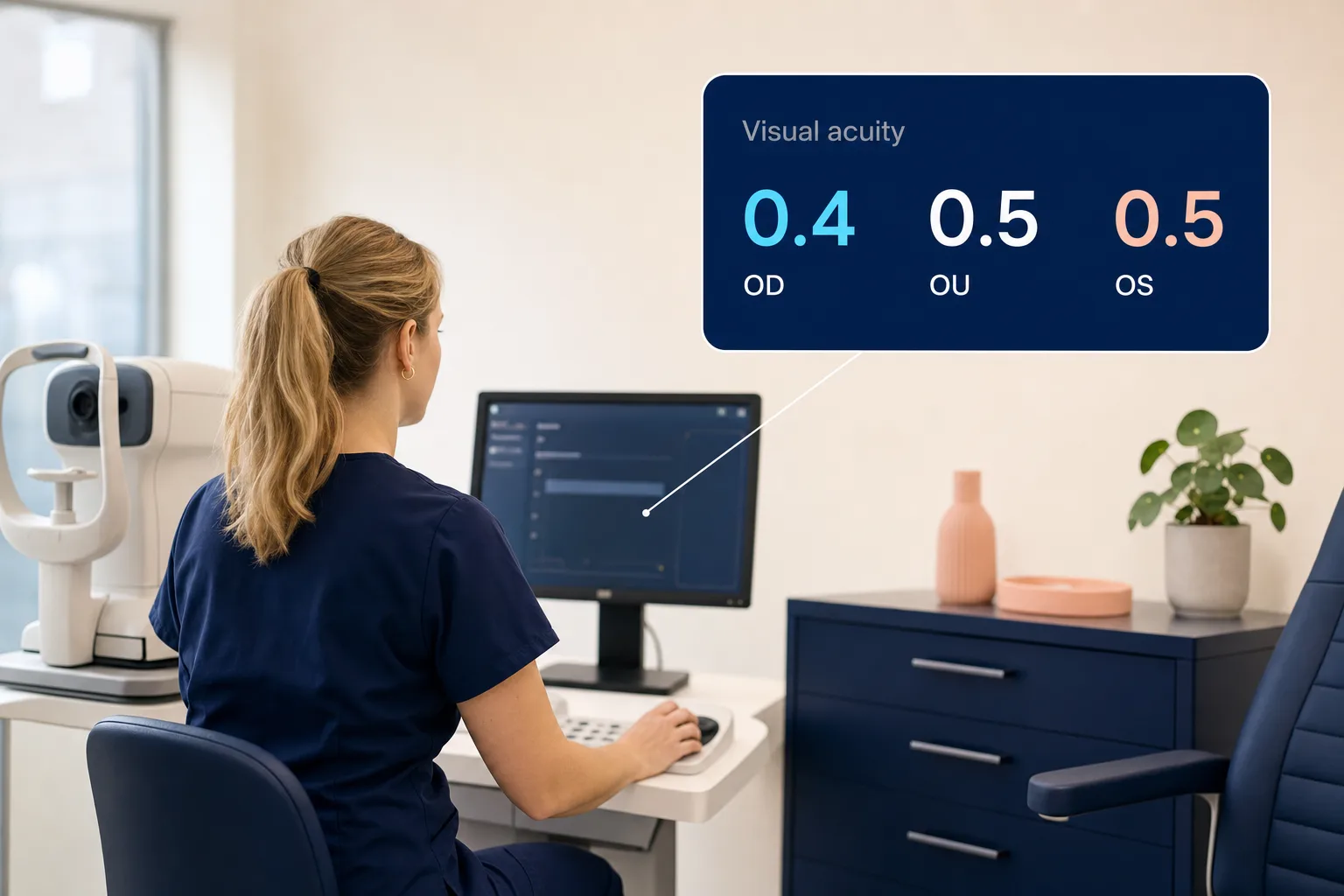
Every measurement section has the same structure. The right eye on the left, both eyes in the middle, the left eye on the right, each with its own colour so you do not mix them up. Visual acuity in three layers: uncorrected, with the patient’s own correction, and best corrected. Intraocular pressure in mmHg, with the measurement method beside it.
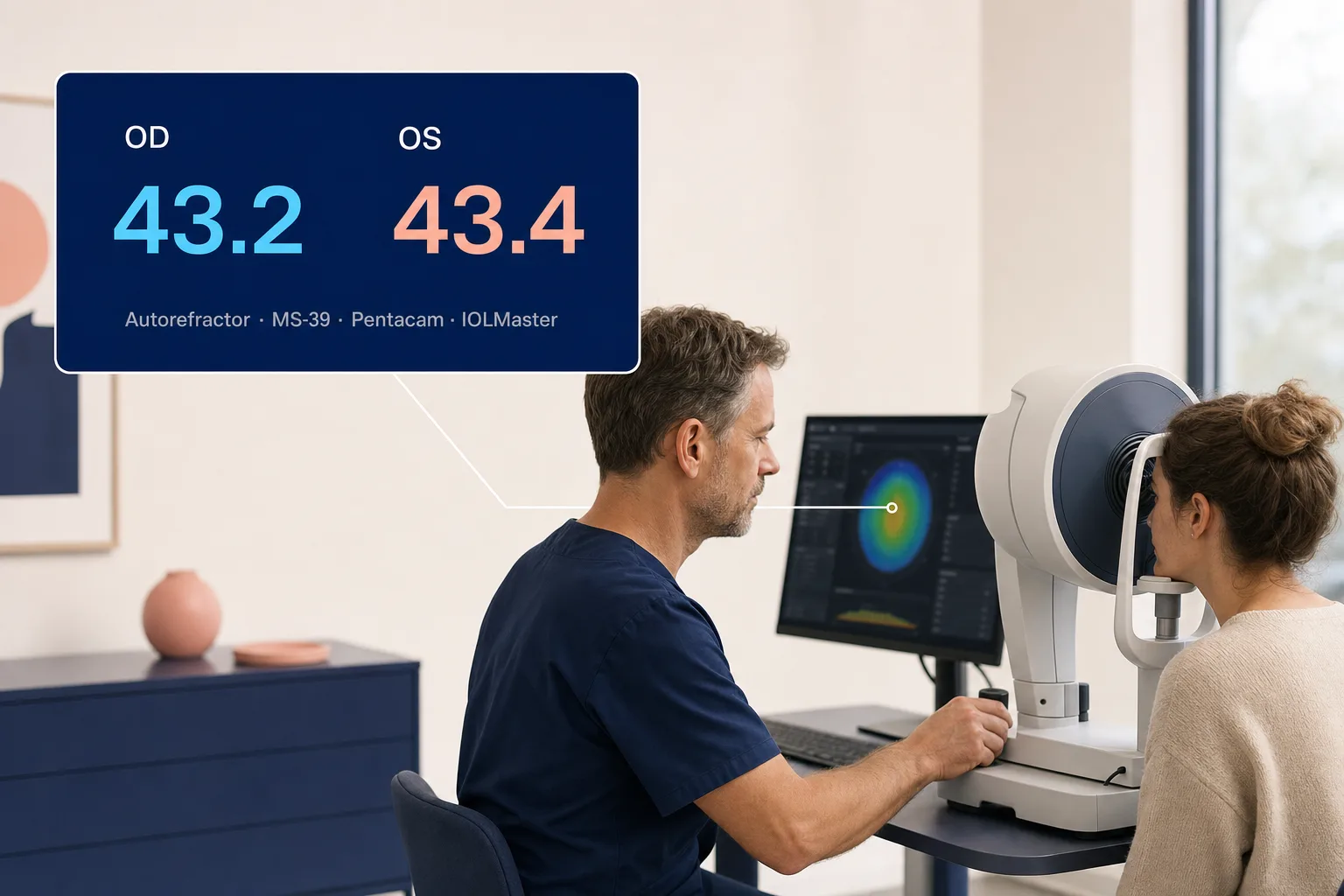
Keratometry is recorded under the name of the device: autorefractor, MS-39, Pentacam, IOLMaster. That is not decoration. A K value without a source is a number. A K value with the device and the time beside it is a measurement the ophthalmologist can lay next to the previous one.
What the section does while you measure
Every field is saved as soon as you leave it. An intraocular pressure above the configured limit, a low visual acuity or a difference between the pupils is flagged below the section. Not a block, but a signal to the ophthalmologist. What it means is for the clinician to judge.
The measurement data for a visit is edited by one colleague at a time. If someone else needs it, they take it over deliberately and that is recorded. Technician and ophthalmologist look at the same figures. A handover is not an export.