
Consent in the consulting room is a conversation under time pressure. The patient nods, goes home and by the evening remembers half of it. aēyes takes the reading and the signing out of the consulting room without taking it out of the record. The conversation with the ophthalmologist remains the basis. The portal gives the time to read it again.
The ophthalmologist records treatment advice for each eye and turns it into the proposal: the treatment per eye and a personal explanation of a few sentences. The practice supplies the standard treatment information. On sending, the price, the letters and the attachments of that day are captured in a sealed PDF with a check value.
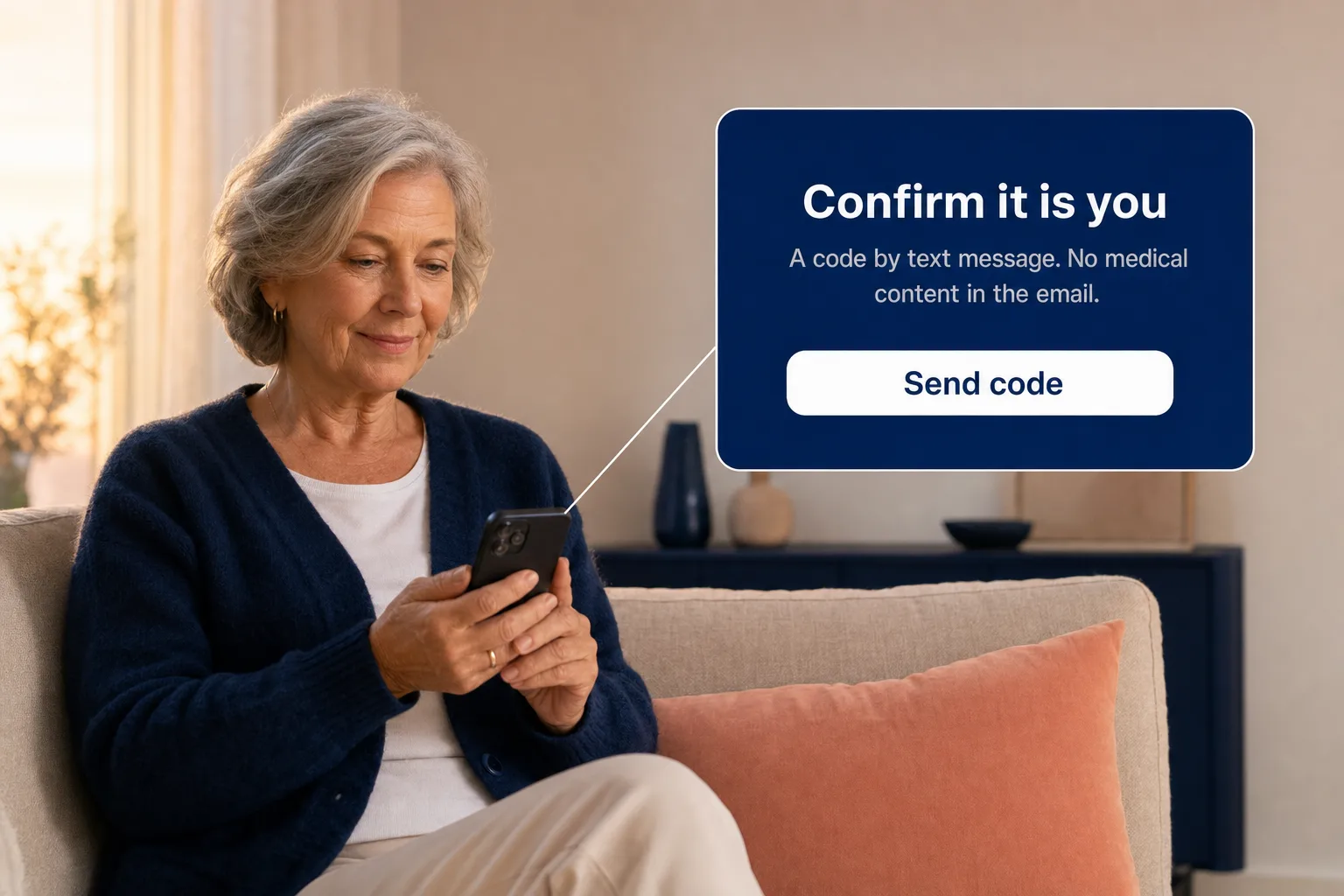
The email contains no medical content. Only that a proposal is waiting.
Four steps, at home
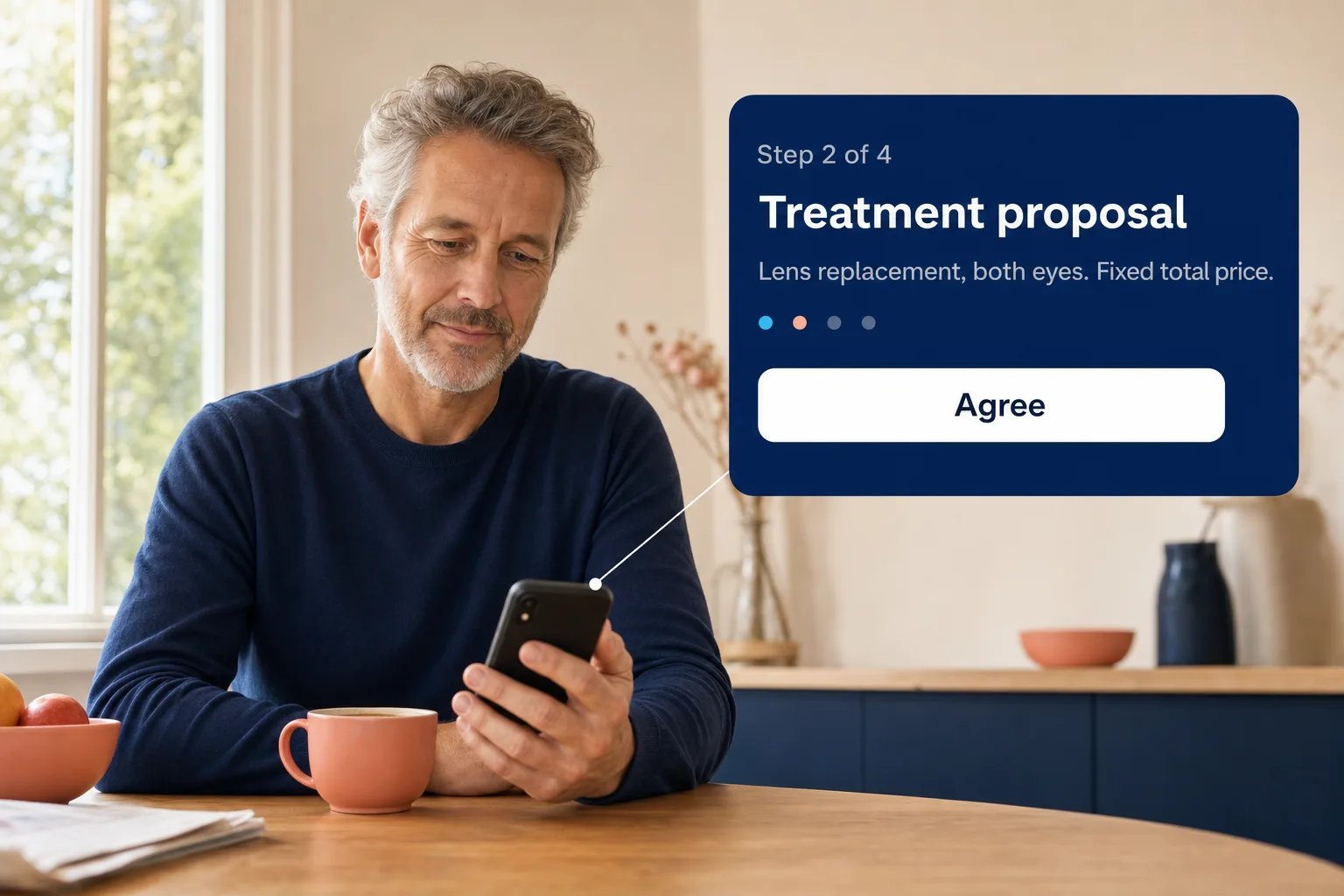
The patient opens the link and receives a code by text message. Then four steps: the covering letter from the ophthalmologist, the treatment proposal with the price, the validity and the cooling-off period, the consent statement, and signing by typing her full name. Signing is only possible once the proposal and the consent have both been ticked off.
The steps go at her own pace. Not signing is a choice too: on declining, the patient can give a reason, and it comes back at the next contact. What has been signed is in the record.
A cooling-off period is not validity
The validity says until when the patient can sign. The cooling-off period says from when the treatment may be scheduled. The practice sets that term per treatment, in line with its own agreements and guidelines. The scheduler sees the earliest treatment date and cannot book before it.
Meanwhile the ophthalmologist sees whether the proposal has been sent, viewed, signed, declined, expired or withdrawn. Viewed means the patient has opened the portal, not that everything has been understood. That question stays in the consulting room.