
From appointment to aftercare in one system
aēyes connects the medical record with the running of the practice. Eleven parts, in the order of the working day.
What the practice uses every day
Scheduling and diary
Plan appointments around staff, rooms and the time available.
Consultation
The ophthalmic technician and the ophthalmologist work in the same record and hand findings over to each other.
Measurements and data quality
DICOM worklists, values per eye, cross-checks between devices.
Decision support
Technique comparison and vault prediction, with the measurements used alongside.
Letters and treatment catalogue
Explanation, treatment proposal and consent information, with the agreed price.
Patient portal
The patient reads the treatment information and gives consent digitally. The signed proposal is kept in the record.
Treatment and aftercare
Theatre scheduling, time-out with IOL check, report, check-ups queued.
Patient communication
Email, text message and portal in one timeline with the patient. WhatsApp and telephony are planned.
AI assistant
Speech into the record, drafts for letters and reports. The doctor decides.
Dashboards
Overviews of capacity, progress and outcomes, matched to the role of the member of staff.
Integrations
Measurement devices over DICOM and HL7. Referral, claims and accounting are planned.
Examination orders
From treatment advice to a workable order
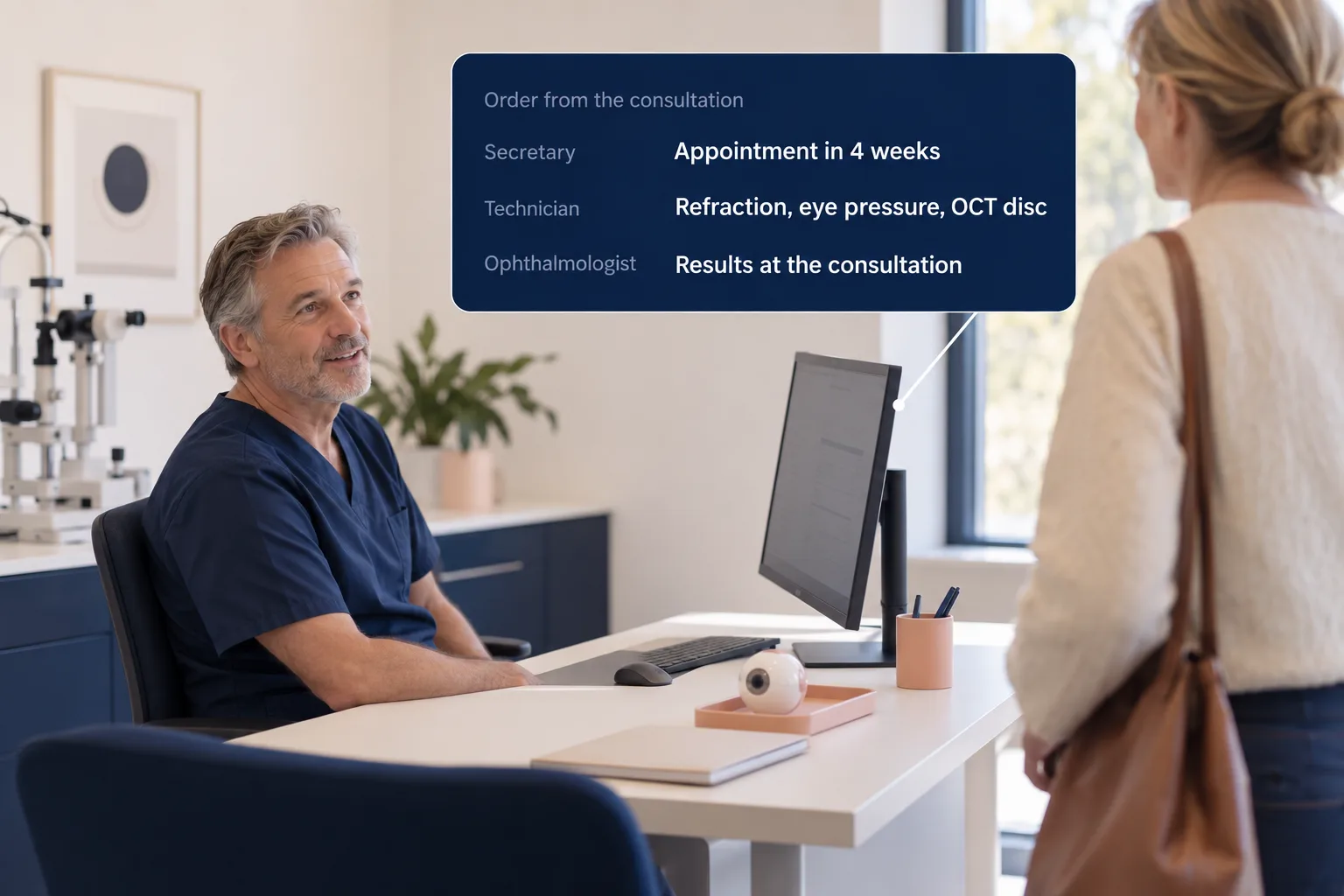
The ophthalmologist records which follow-up appointment and examinations are needed. The front desk uses that order to schedule the appointment. The ophthalmic technician sees which examinations have to be carried out. At the next consultation the doctor can review the results in the same record.
The order is available to the colleagues involved.
Only the exceptions need attention
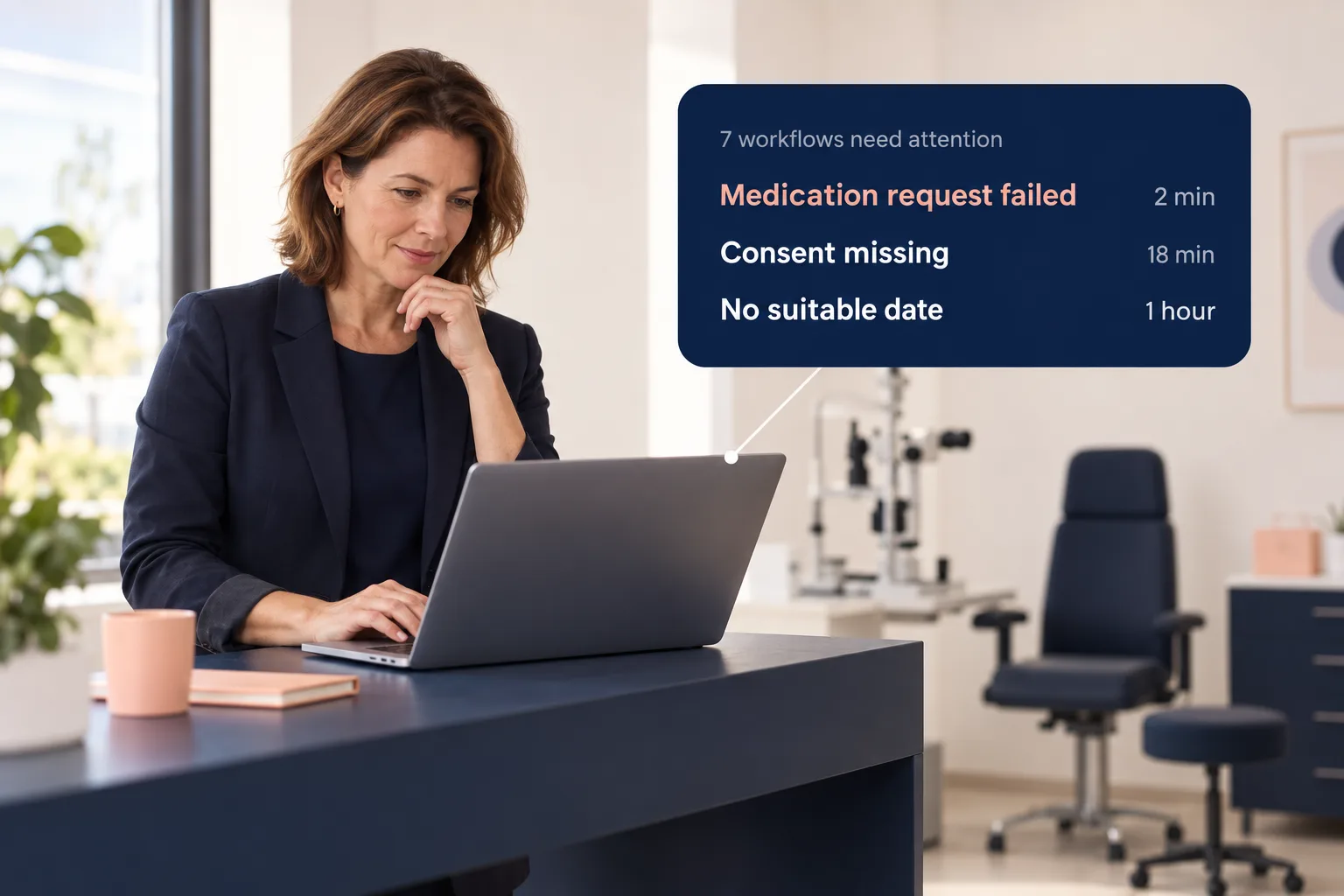
A care pathway consists of appointments, examinations and follow-up actions. The usual route simply runs on in aēyes. Anything that deviates appears in an overview with the reason alongside: a proposal that has not been signed, an examination that is not complete. That way the team follows up where it matters.
That is why it all belongs in one system
Once an appointment is scheduled, the examination follows. Connected devices deliver measurements to the record. The ophthalmologist reviews the data and discusses the treatment proposal with the patient. After consent, the team uses the same information for the surgery and the check-ups. The recorded outcomes are then available for reporting.
- 01Appointment
- 02Capacity
- 03Worklist
- 04Record
- 05Data quality
- 06Calculation
- 07Proposal and consent
- 08Theatre plan
- 09IOL check
- 10Dashboard
What is arranged in the background
Care pathways and examination orders
Record per appointment type which examinations are needed. The ophthalmic technician sees which preparation belongs to the visit.
Team messages and tasks
A message to the front desk, a task for the technician, without email or a chat app alongside. In the record, with a name and a time.
Roles and permissions
Every role sees and does what belongs to that role. The organisation administrator sets the permissions.
Several sites
Rooms, rosters and teams per site. One practice profile, one record.
The practice’s own branding
Letters and portal in your name and colours. The patient sees the practice, not aēyes.
aēyes makes most sense once you have seen it
Thirty minutes, with your own care pathways and theatre programme as the example.