From measurement to decision
The calculation is ready when the surgeon sits down, with the measurements it used beside it and always open to change.
Source data first, visible and open to change
aēyes automatically selects the most recent relevant measurements for this patient. Above every calculation it states which sources were used and when they were taken. If something is not right, the surgeon picks a different measurement.
Pentacam
Corneal topography and pachymetry, straight from the device.
MS-39
Tomography and anterior segment, for the same patient and the same eye.
Objective refraction
The latest measurement from the measurement lane, recorded per eye.
Biometry
Axial length and anterior chamber for lens calculation and vault prediction.
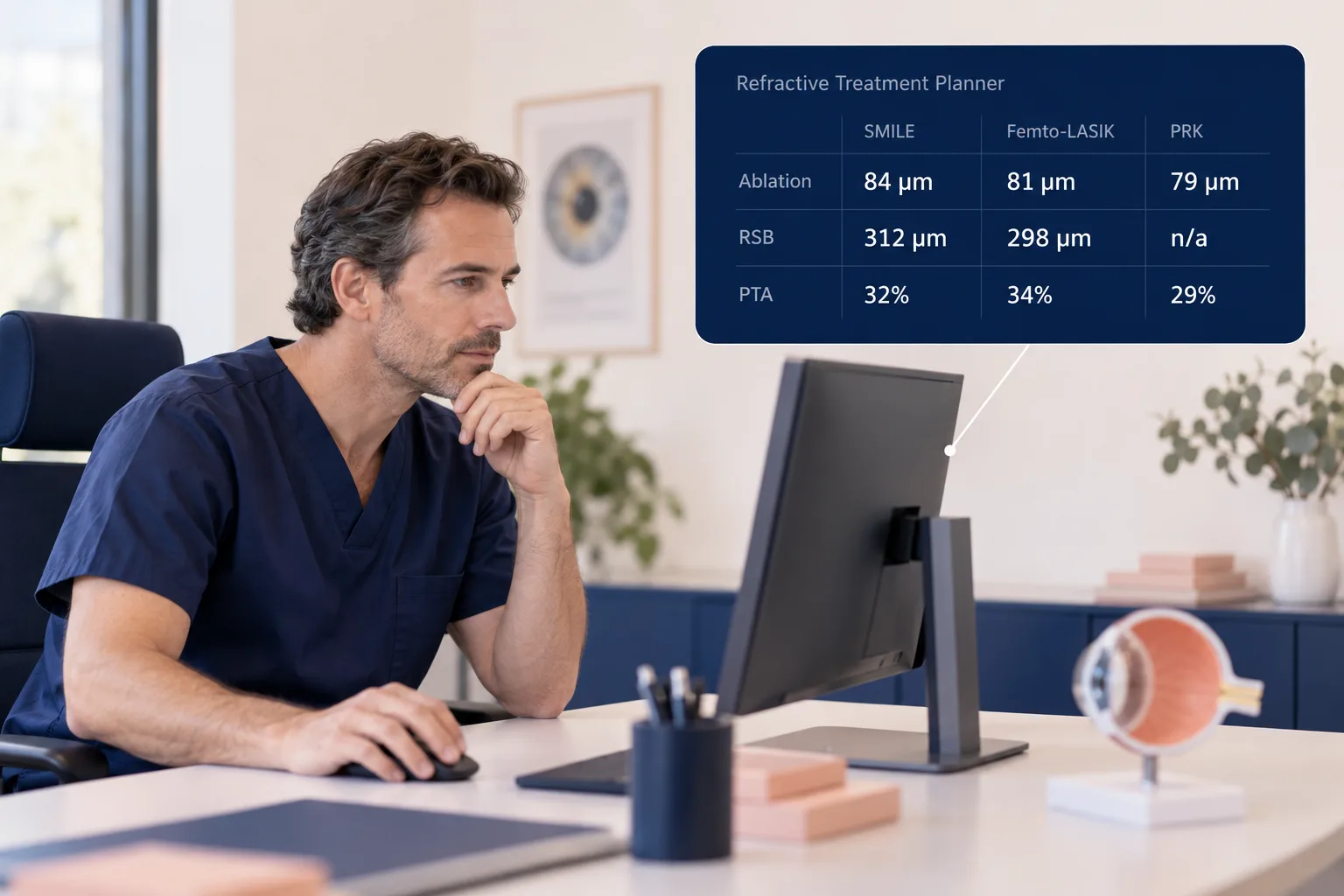
Refractive Treatment Planner
SMILE, Femto-LASIK and PRK side by side
Compare calculations for different laser eye techniques, such as SMILE, Femto-LASIK and PRK. The overview uses the same source data and shows, among other things, how much corneal tissue is treated and how much is expected to remain.
The ophthalmologist checks the input and judges whether the calculation is usable for this patient. aēyes does not choose a technique and does not prepare a treatment without a doctor’s approval.
aēyes calculates. The surgeon decides.
ICL Vault Predictor
Population data, your outcomes, this patient
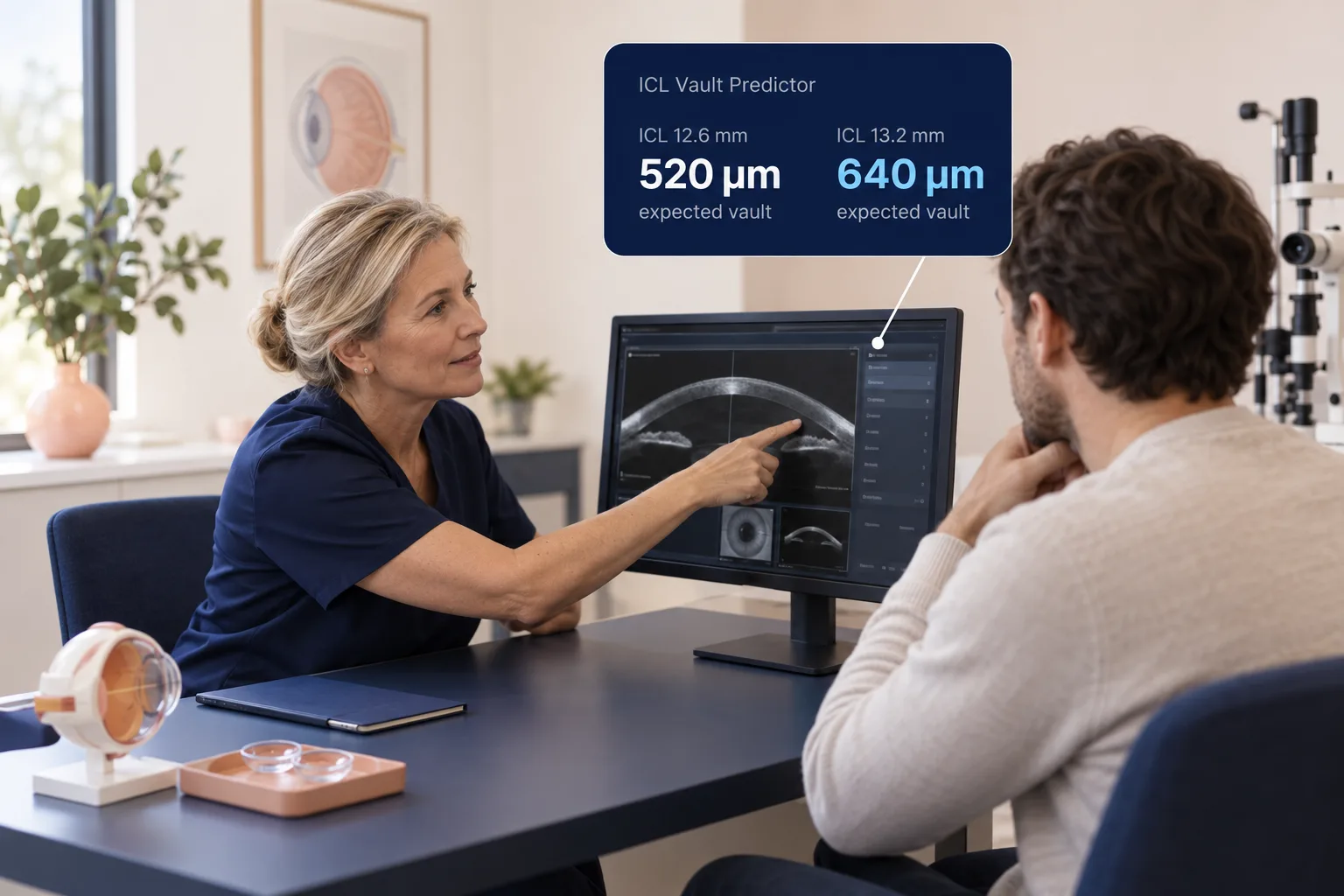
The prediction estimates the space between the implanted lens and the natural lens, the vault, per lens size. The model uses this patient’s measurements and historical outcomes, and can take into account what your own procedures have produced. Which inputs and assumptions drive the result is stated alongside it.
A prediction is an estimate, not an outcome. Functions that calculate or predict are assessed before use against validation and against the requirements that apply to medical software.
The ophthalmologist judges whether the prediction is usable.
Good outcomes start with good preoperative data.
That is why decision support is tied to the data quality check.
Bring a difficult case to the demo
We will work it through with your source data and your outcomes.