
Patient contact kept together
Find messages, call notes and treatment proposals with the patient. That way a colleague can see what has already been discussed.
One timeline
Everything with the same patient
A patient calls, asks a question by email later and signs the proposal at home. Recording those contact moments in the record lets the team discuss what comes next without working out the history again.
Medical information sits in the secure portal. Email and SMS tell the patient that something is waiting. Integrations with WhatsApp and telephony are planned and not yet available.
The next colleague can build on what was agreed earlier.
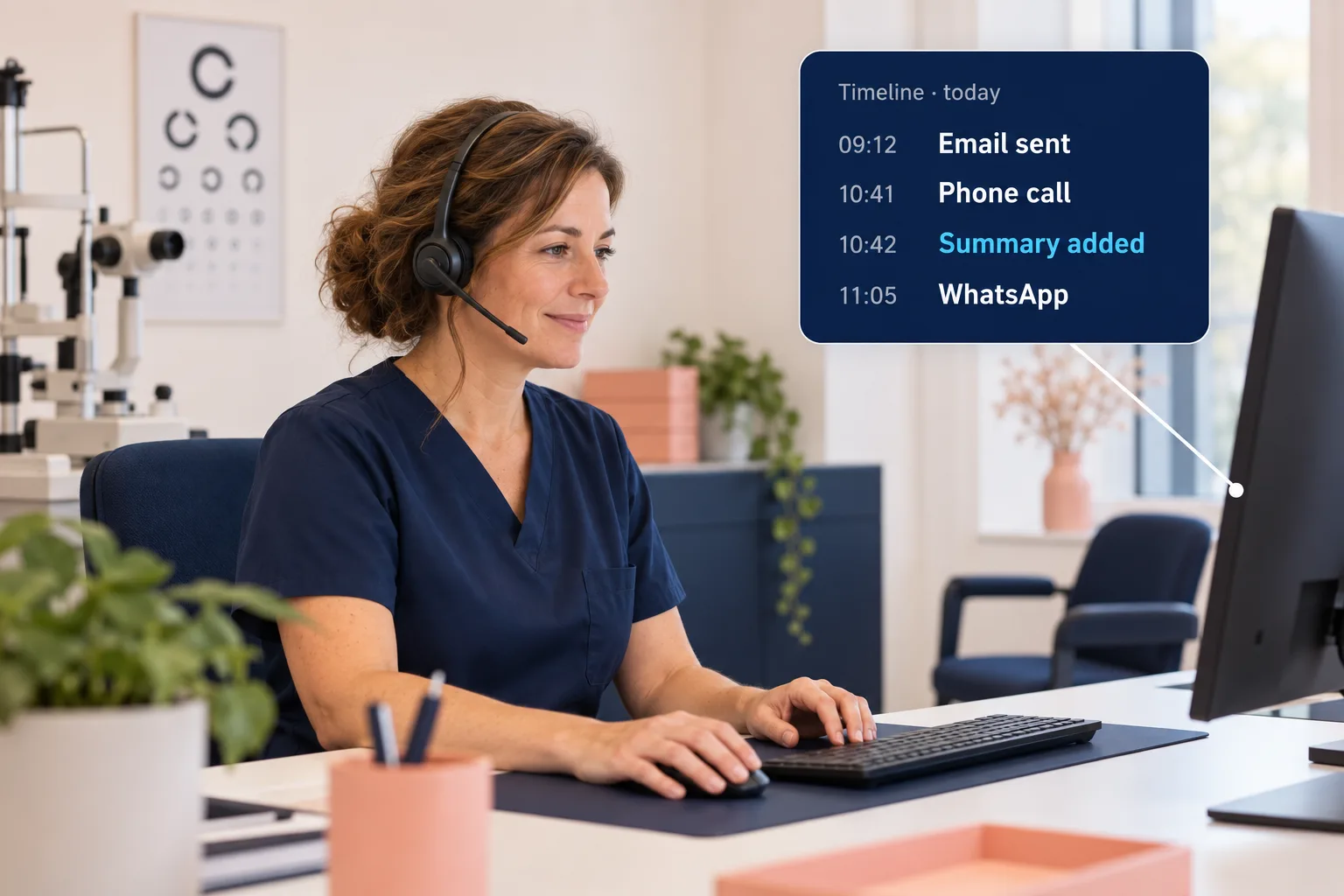
Four channels, one record
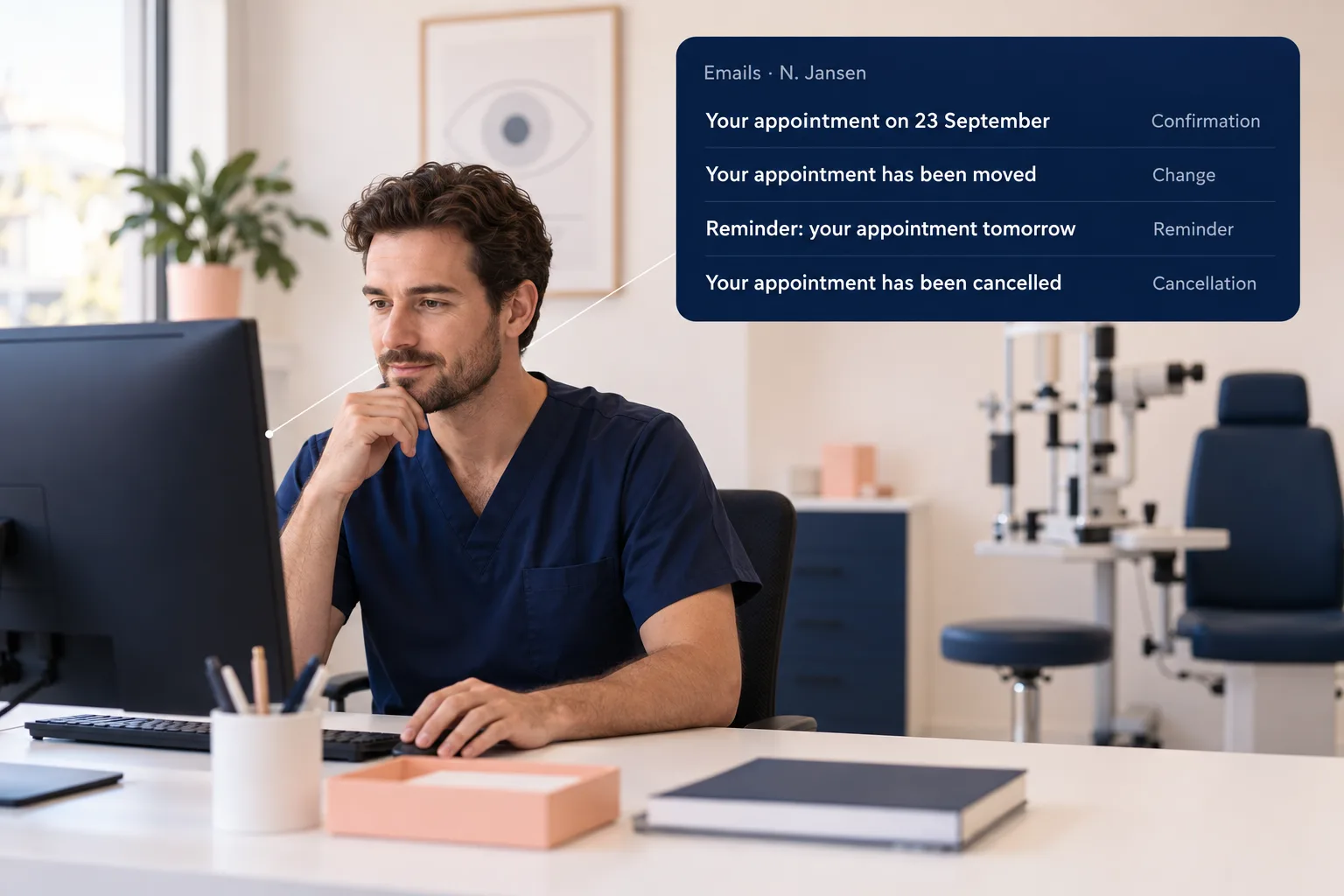
Confirmation, change, cancellation and reminder around the appointment, in the words of the practice.
Telephone
The call is added as a note with the patient, including what was agreed. An integration with the telephone system is planned.
Planned, for reminders and short messages. Medical content always goes through the secure portal.
Patient portal
Letters, treatment proposal and consent behind a secure link with a code by SMS.
Around the appointment
Messages around the appointment go out on their own
Per appointment type you set which messages go out and when. The organisation administrator writes the texts once, with merge fields for date, time, location and clinician. Without a text of your own, aēyes sends a tidy standard message.
- A confirmation as soon as the appointment is set.
- A change with both the old and the new time in it.
- A cancellation with an invitation to book again.
- Up to three reminders, each at its own moment.
Sent messages stay visible in the record.
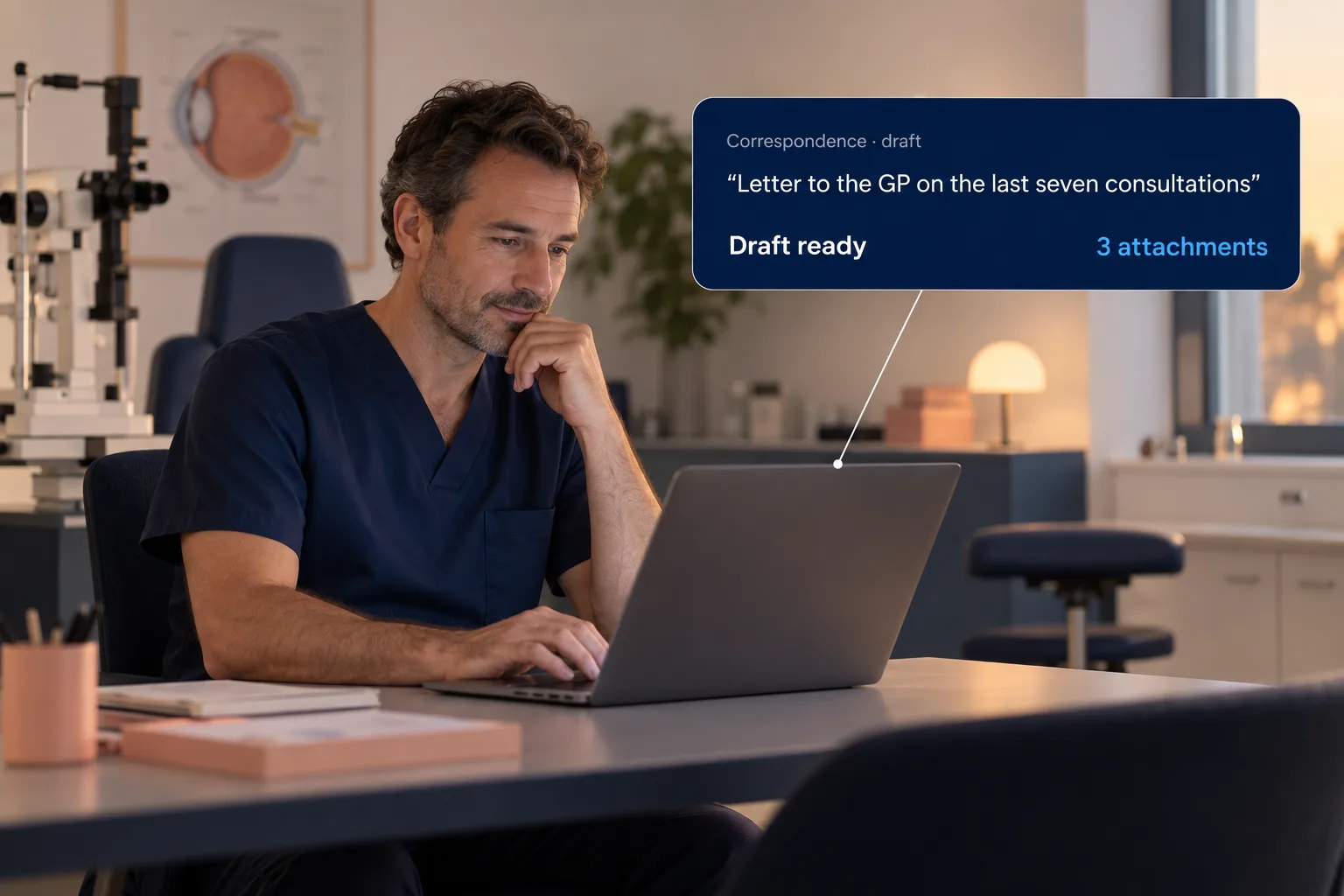
The letter starts from the record, not from a blank form.
Correspondence
The letter adapts to the recipient
Ask for a letter to the GP about the most recent consultations and aēyes takes the information from the record, adds the relevant scans and prepares a draft.
The content has to suit the recipient and the purpose of the letter. The doctor checks whether the draft answers the question and which data may be shared. Only then is the letter sent.
Which messages go out today?
Bring them to the demo. We will look at who types them and what is kept.