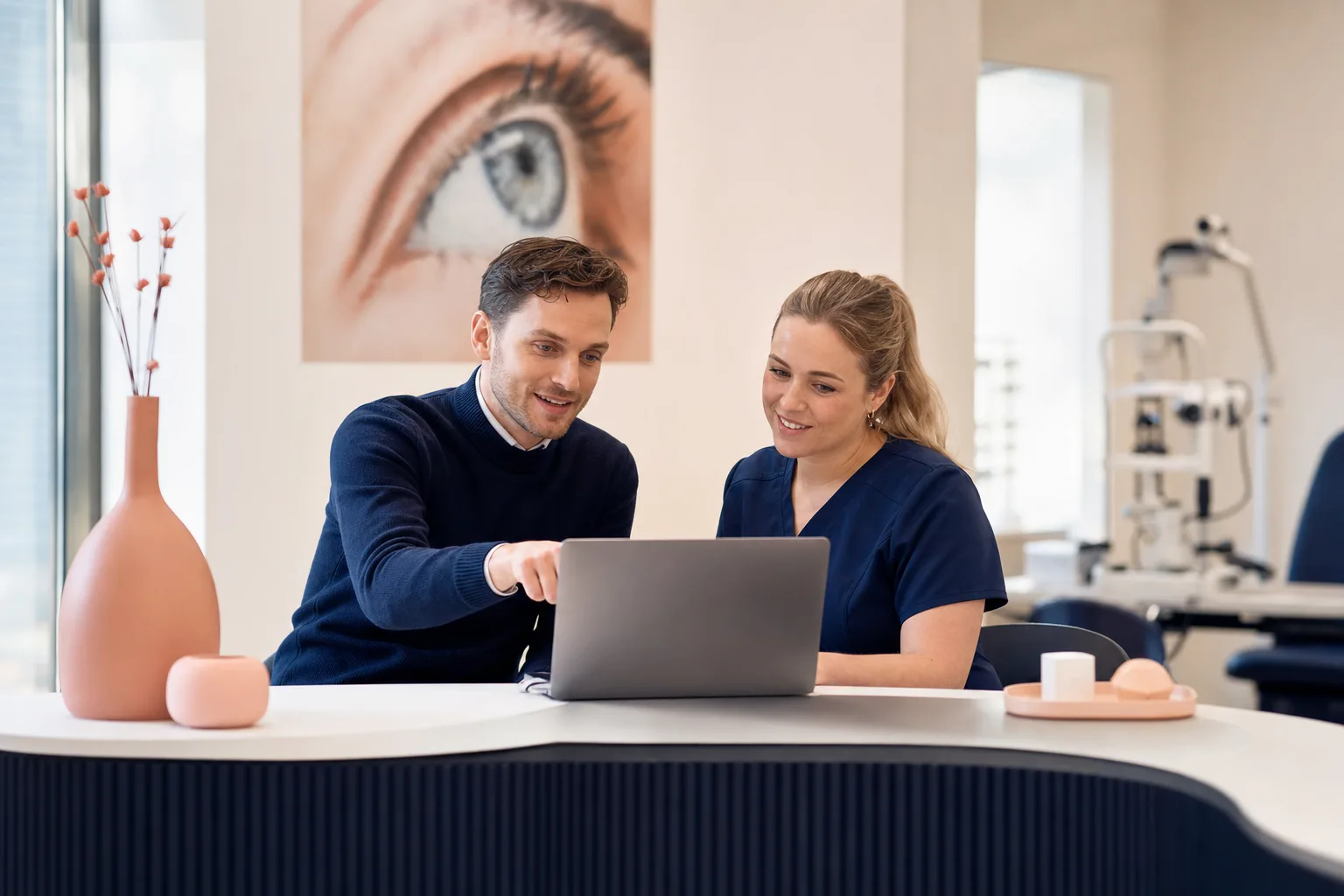
Quarter past eight. The receptionist opens the day in aēyes and sees who is coming, to whom and in which room. Today that means three ophthalmologists, two ophthalmic technicians and a full morning in the measurement rooms. This is how that morning runs when everyone works in the same record.
At the front desk
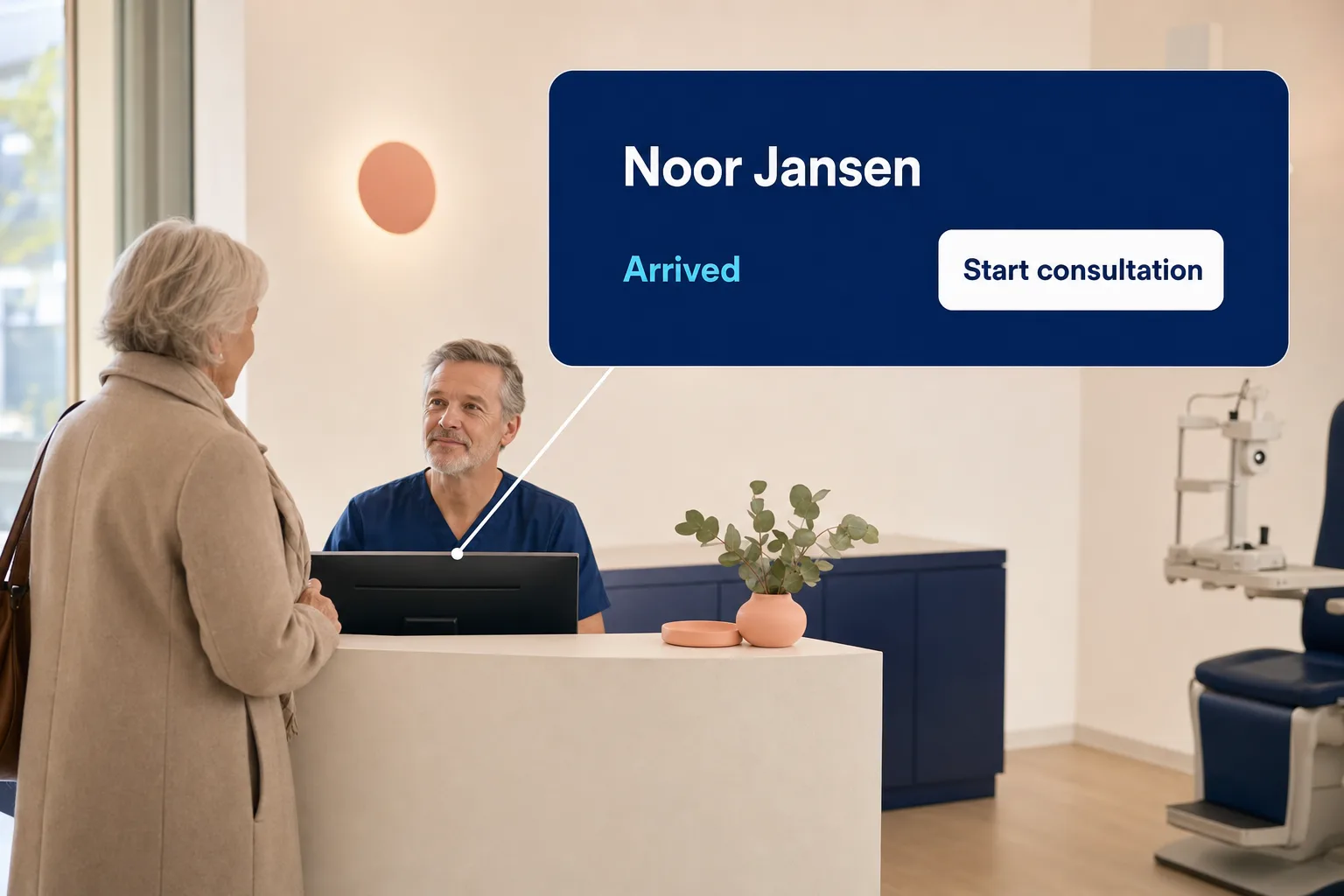
The first patient arrives for a cataract screening. The receptionist looks her up by name and marks the appointment as present. That is all it takes: no second screen, no note carried down the corridor. In the measurement room the technician sees that she has arrived.
In between, someone rings to ask for an earlier slot. The receptionist sees the free moments in the published schedule, with the right clinician and for the right appointment type, and books during the call. Rescheduling is a single action and the appointment keeps its history.
Present at the front desk is present in the measurement room and with the ophthalmologist.
In the measurement room
The technician starts the preliminary examination. The examinations from the care protocol are ready and waiting: visual acuity, intraocular pressure, keratometry, biometry. Every section has the same layout, with columns for the right eye, both eyes and the left eye. Click an examination and the screen jumps to the right block.
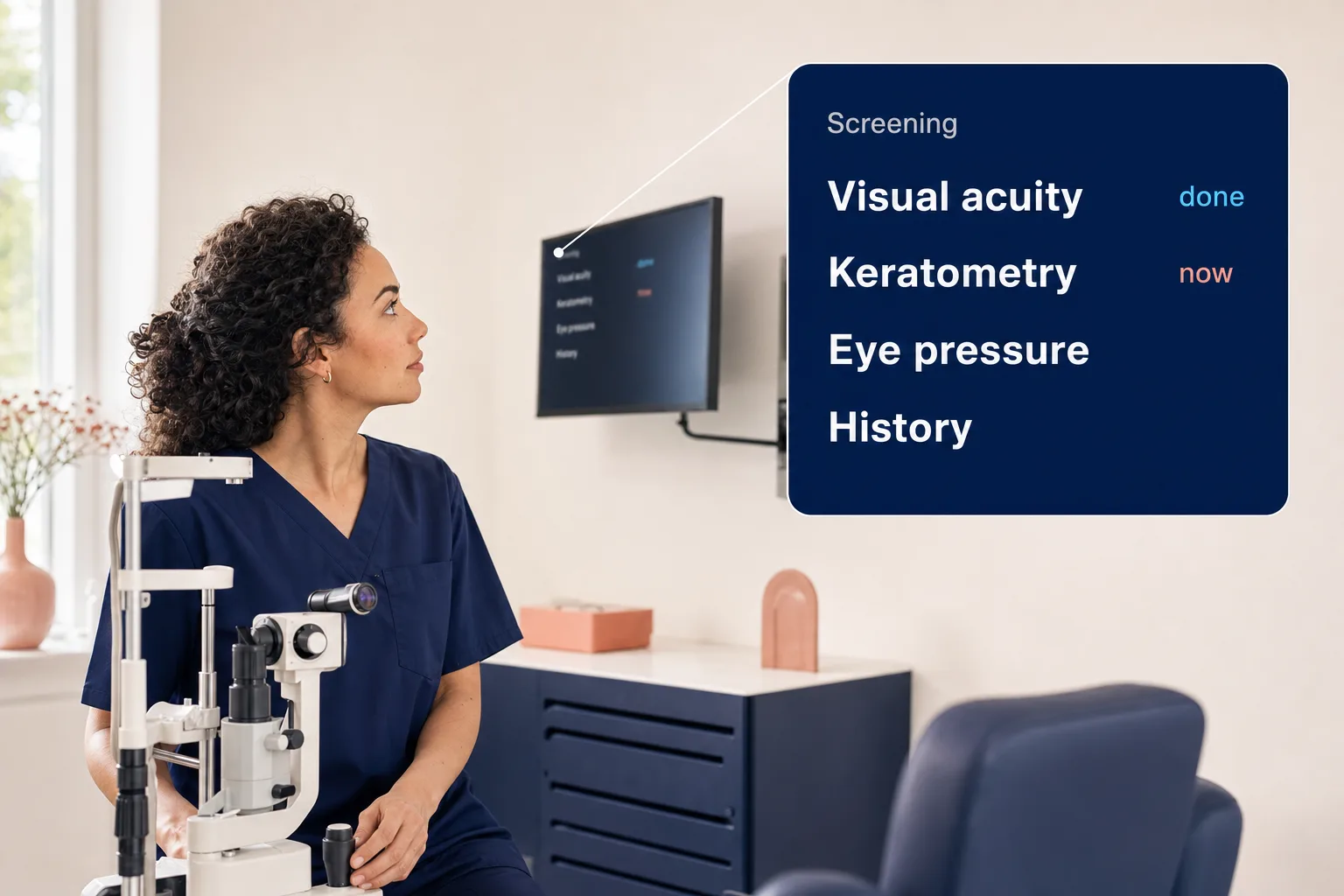
The intraocular pressure comes from the tonometer and the biometry from the IOLMaster, through the integration and with the device recorded alongside. A value outside the configured range is flagged below the section. The technician closes with a short handover.
With the ophthalmologist
The ophthalmologist does not open an empty consultation. Visual acuity, pressure, biometry and the handover are already there. She assesses, discusses the treatment and records treatment advice for each eye. From that advice she creates the treatment proposal the patient reads at home. So the morning ends where it began: in the same record.