
The assistant writes, the doctor decides
Support for letters, reports and handovers. The clinician reviews every draft before it is used.
What the assistant does
Reporting and correspondence take time alongside the consultation. The assistant uses information from the record to draw up a first version. The clinician checks the text, adds to it and decides what is used.
- Letter to the GP, after a consultation or the last check-up, from the report and the measurements.
- Handover from ophthalmic technician to doctor: what was measured, what stood out, what is still open.
- Personal note with the treatment proposal, in plain language, in the tone of the clinic.
- Measurement values read from device PDFs and images and placed in the right block, per eye, for checking.
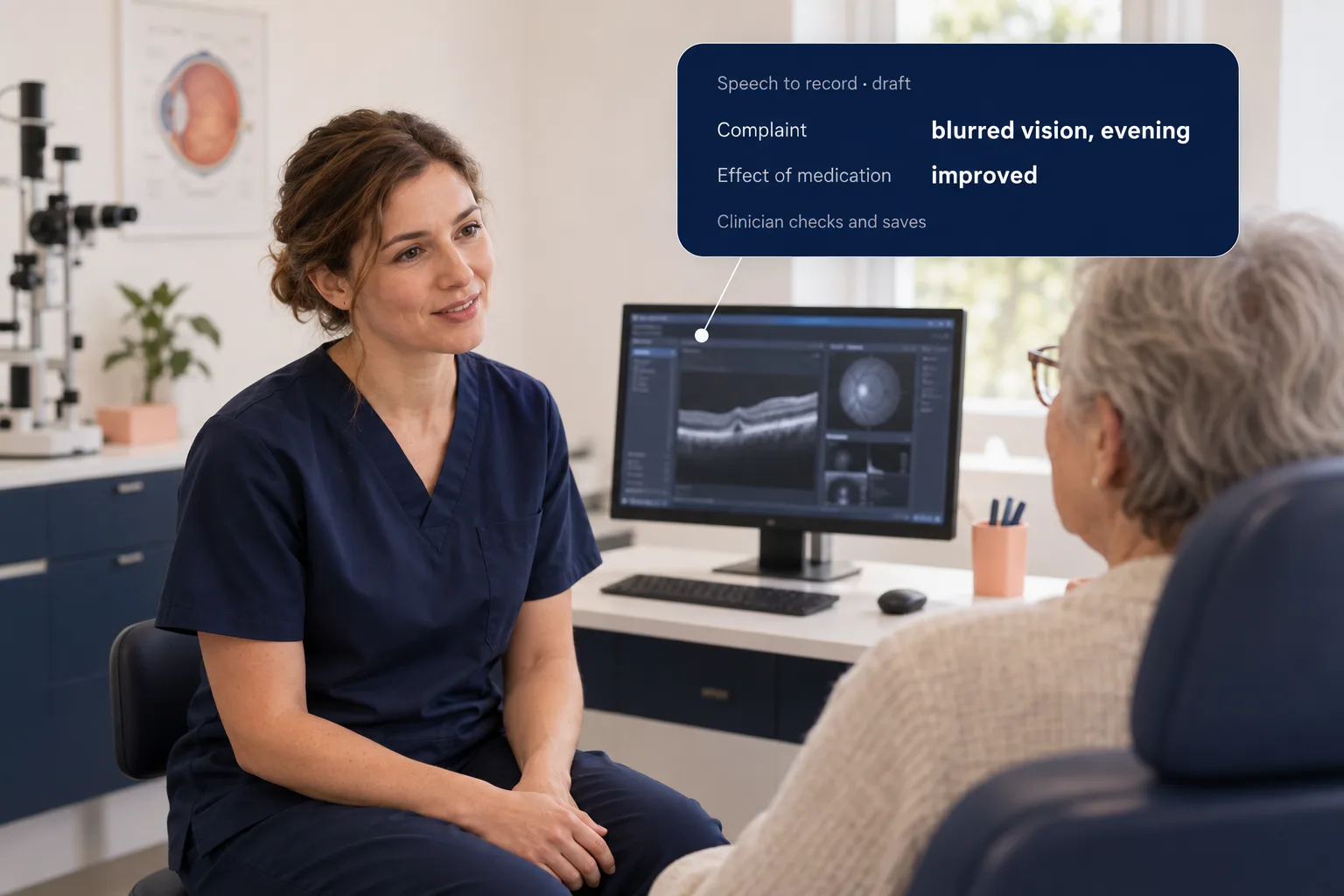
- Speech into the record during the consultation: the history as structured text, without turning your back on the patient.
- Surgery report as a draft from the time-out and the procedure.
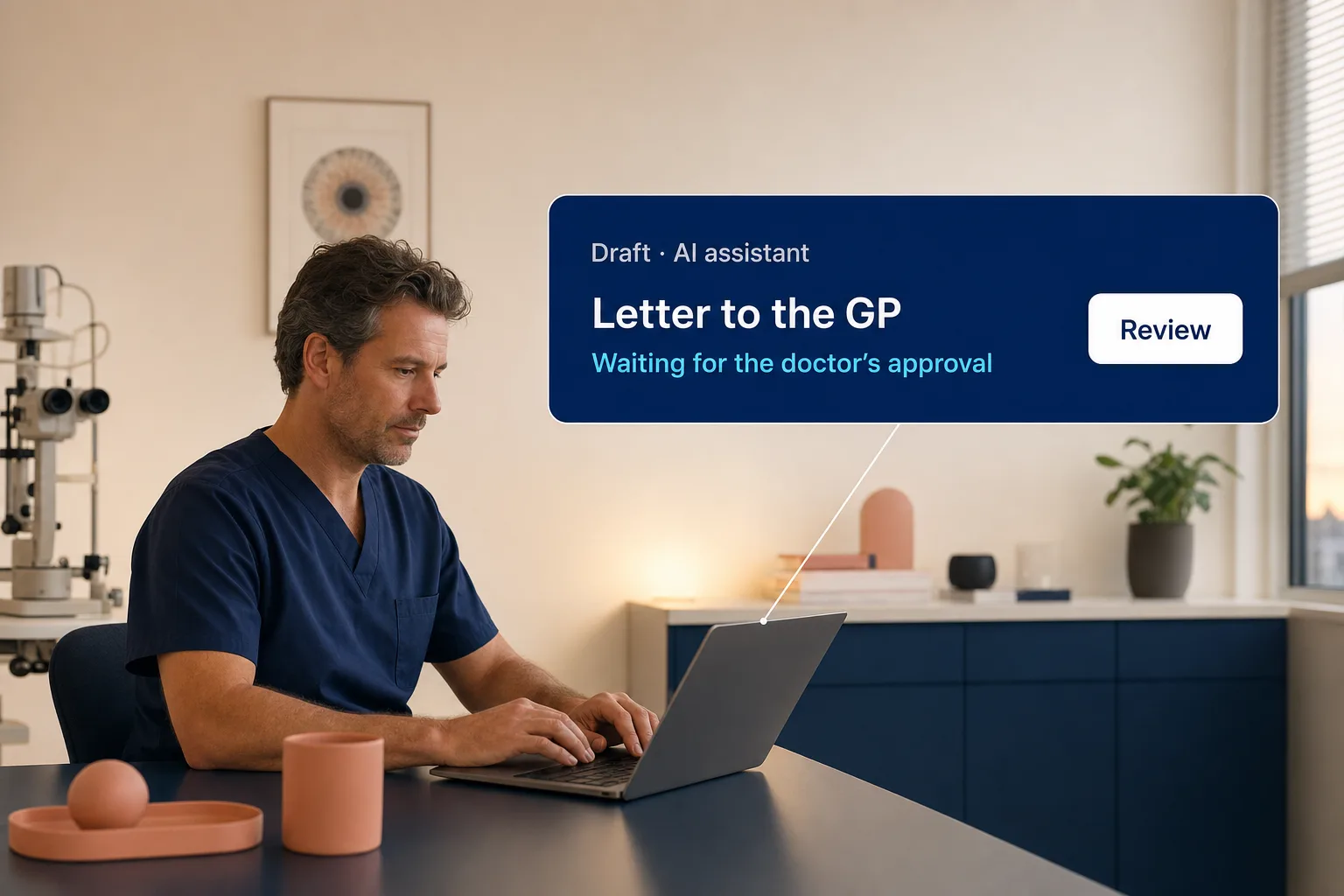
draft prepared · waiting for approval by the doctor
What the assistant does not do
No diagnosis, no treatment advice, no risk score. The doctor makes the diagnosis and determines the advice per eye. A fluently written draft can be wrong or incomplete, which is why the check by the clinician is a fixed step and not a formality.
Transparency, human oversight and logging are design requirements. Every draft is recognisable as AI, a clinician approves it and that approval is in the audit log.
How we safeguard that
Human oversight
Every suggestion from the assistant is a draft. A clinician approves it, adjusts it or discards it. The clinician decides which content is used.
Visible as AI
A draft is marked as a draft, with the source alongside it: which consultation, which measurements. That lets the clinician check the content.
Logged
What the assistant suggested, who approved it and what changed is in the audit log. Just like every look at the record.
No training on patient data
Patient data is not used to train models. We set that down in the data processing agreement, including for the suppliers we work with.
Under the GDPR
Processing under the GDPR. Which suppliers we work with and under which agreements is set out in the data processing agreement.
On or off per clinic
The organisation administrator decides which parts of the assistant are available to the team.
Speech
Your attention stays with the patient, not the screen
If you want it to, the assistant listens in during the consultation. The aim is not a transcript: the assistant takes the medical information from the conversation and puts it in the right fields as a draft. You read it back and save it. Without your approval nothing in the record changes.
Less admin. More attention.
Bring your information security officer along
Thirty minutes. We show where the assistant stops and the doctor begins.