
The Eye Operating System for your eye clinic

aēyes is more than an EHR. It carries the whole process of your clinic: scheduling, the record, measurements, treatment and aftercare in one system. That way the whole team works from the same information. Built with ophthalmologists. New clinics are expected to start in 2027.

See the platform

Less retyping, more overview

When the diary, the measurement devices and the record stand apart, the team has to copy or look up information again and again. aēyes brings that information together. Measurement data is available during the consultation, and the treatment agreed is the basis for the surgery scheduling and the aftercare.

For the practice manager that means more insight into progress and staffing. For the clinician it means the relevant information sits together. Between them they can see sooner where extra attention is needed.

What each role gains from it

Every step builds on the one before

In an eye clinic, colleagues hand care over to one another all day long. The front desk schedules the appointment, the ophthalmic technician prepares the examination and the ophthalmologist discusses the treatment. aēyes connects those steps, so it is clear what has been done and what still has to happen.

  1. Match rosters and appointments to the staff and rooms available.

    See diary
  2. Examination, findings and treatment advice together in the record.

    See consultation
  3. Measurement data per eye, with the device it came from alongside.

    See measurements
  4. A treatment proposal with an explanation, the price and attachments.

    See letters and proposal
  5. The patient reads the proposal at home and can give consent digitally.

    See portal
  6. Prepare, record and follow up the surgery in the same record.

    See treatment and aftercare

Available at every step

The whole platform

Four examples from the working day

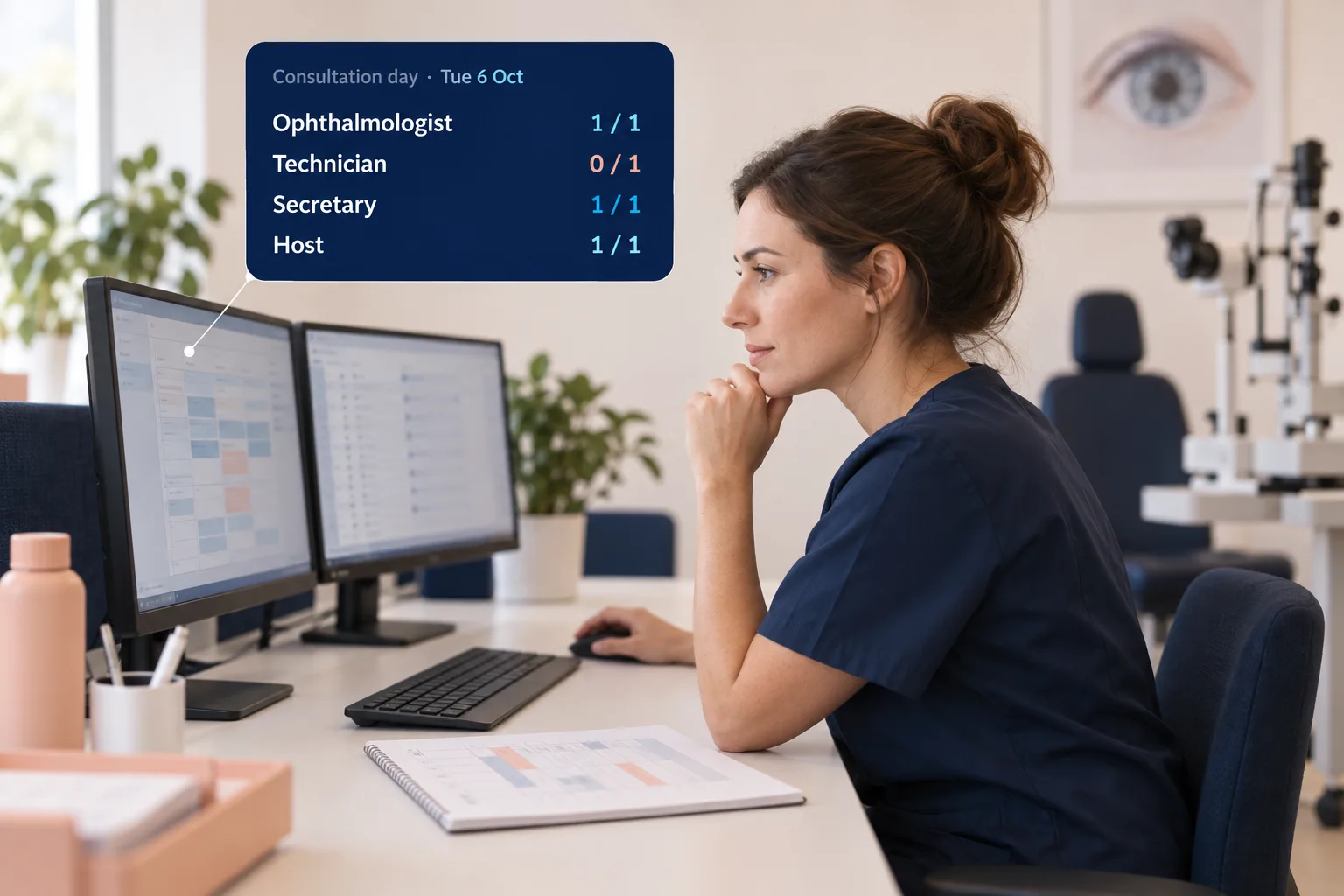
Planner looks at the day template on her screen, with a shortage of one ophthalmic technician

A view of the staffing

You set up working days as a template. Staff enter their availability and aēyes sets it against the capacity required. Shortages show up before the week starts.

More about scheduling

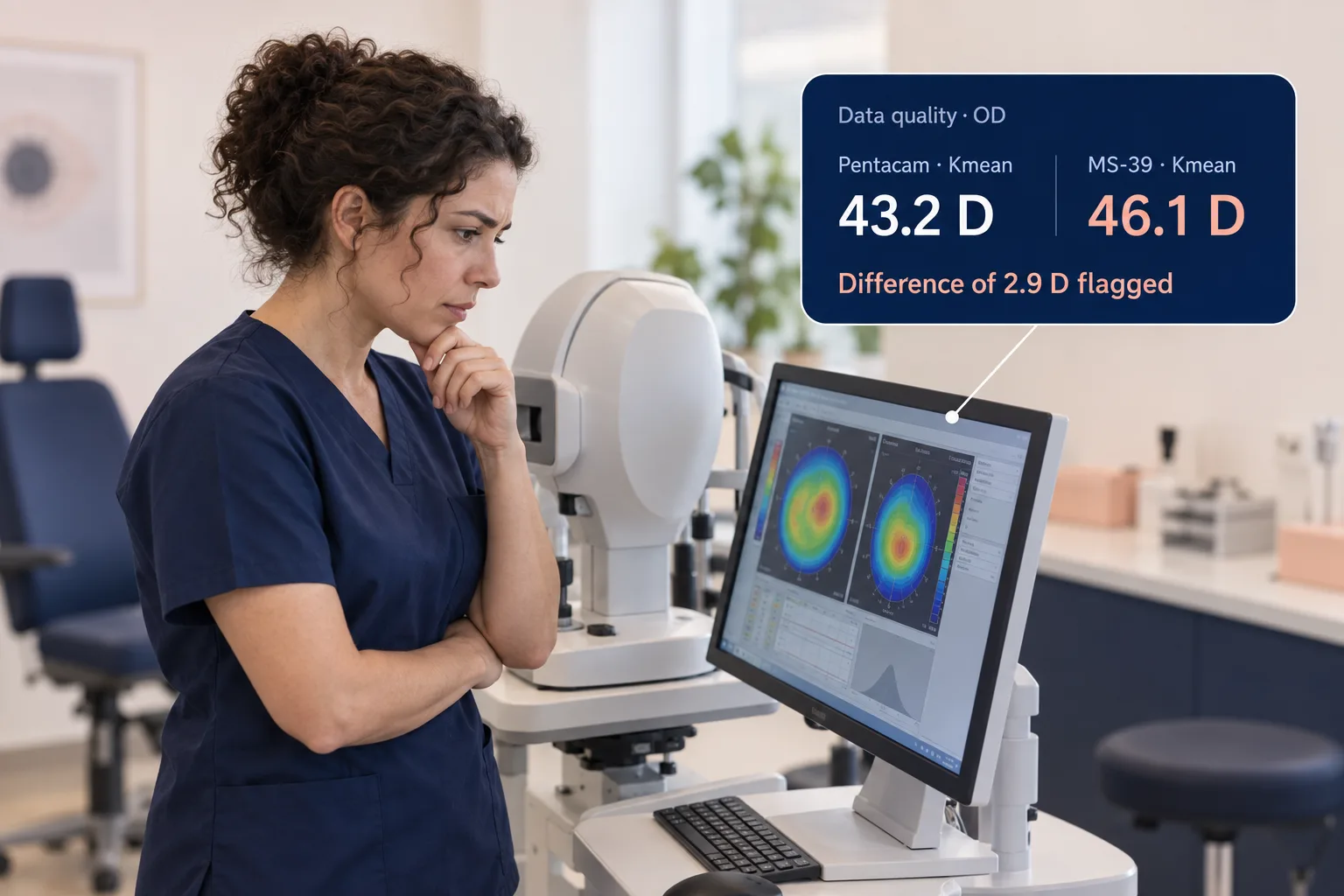
Ophthalmic technician sees on screen that the keratometry from two devices differs by 2.9 D

You measure once

Connected devices deliver images and values to the record, per eye and with the device noted alongside. If two measurements diverge, the ophthalmic technician sees it before the doctor calculates with them.

More about data quality

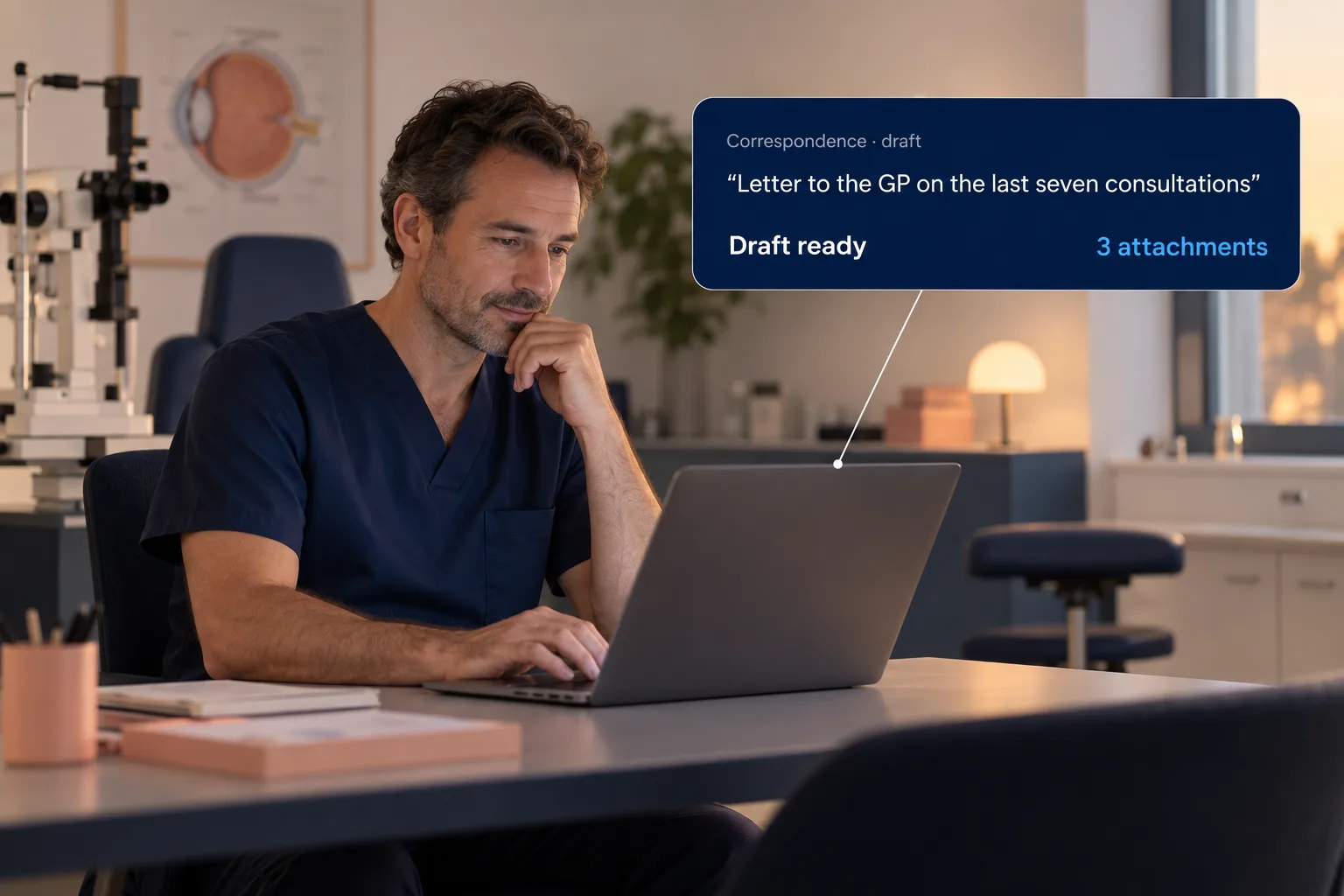
Ophthalmologist reads the draft letter to the GP with three attachments on his laptop

The GP letter is ready as a draft

The AI assistant drafts the letter to the GP from the record. The doctor checks the content and the attachments before the letter goes out.

More about correspondence

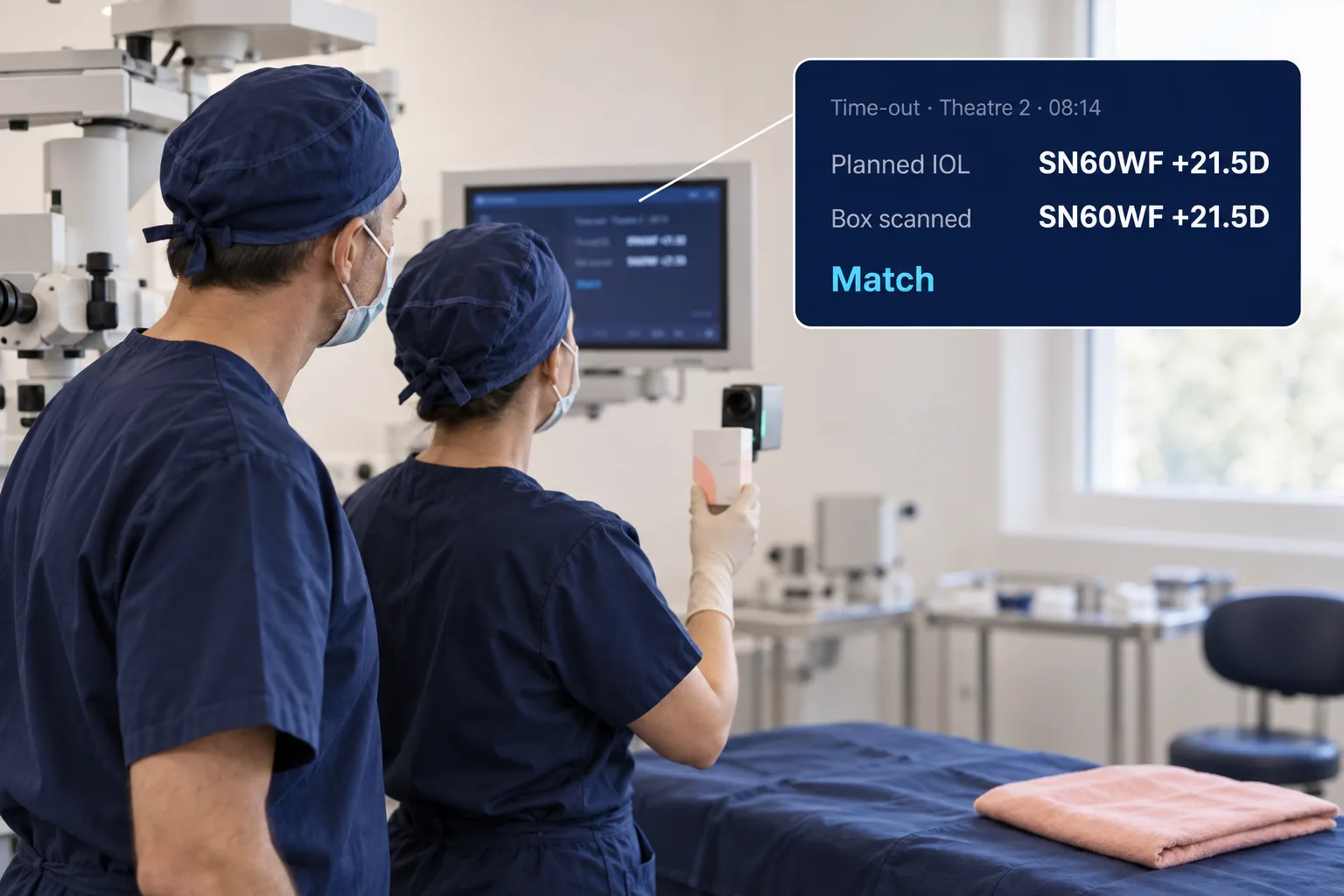
Theatre team compares the scanned IOL box with the planned lens during the time-out

A lens check at the operation

During the time-out aēyes compares the scanned IOL box with the lens planned in the record. Patient, eye, treatment and implant in one view.

More about the theatre day

Measurement devices now, the rest of the chain planned

Available

  • Measurement devices over DICOM and HL7
  • Sign-in via SSO
  • Email and text messages
  • Export via FHIR, CSV and PDF

Planned

  • Referral via ZorgDomein
  • Insurance check and claims via VECOZO
  • GP correspondence
  • Payments
  • Accounting

Before the start we agree which ones you need and when they will be ready.

All integrations

Access per practice, every view logged

  • The whole database encrypted
  • Access per organisation and role
  • Every view in the audit log
  • Export via FHIR, CSV and PDF
  • Two-step verification and SSO

We work to NEN 7510 and ISO 27001. We are not yet certified.

How we approach security

Built where eye care happens

aēyes runs in daily practice at July, the refractive clinic we develop aēyes with. Ophthalmologists, optometrists, ophthalmic technicians and management work there in the same system every day. Whatever comes up in that work, we solve before the next clinic starts.

Read how a morning there unfolds

Frequently asked questions

What is aēyes?

aēyes is an Eye Operating System (EOS) for ophthalmology: one system for the whole process of the clinic. Diary, measurements per eye, treatment proposal, consent, surgery and aftercare sit together, so clinicians and support staff work from the same information. The record, which others call an EHR or EMR, is one part of it.

Is aēyes an EHR or an EMR?

Both names describe the electronic record of a practice, and neither covers what aēyes does. A record stores, whereas aēyes carries the whole process: from scheduling and examination to treatment and aftercare. That is why we call it an Eye Operating System (EOS). If you are looking for an EHR or EMR, you will find the record in aēyes and everything around it.

Which practices is aēyes for?

Independent eye clinics, independent treatment centres with ophthalmology and ophthalmic practices, from a single site to an organisation with several locations. Not for large hospitals or hospital-wide tenders.

When can we start?

aēyes already runs in daily practice at July. New clinics are expected to start in 2027, a limited number at a time. The start date depends on the setup, the data migration and the integrations you need. The waiting list is where you register your interest.

Does aēyes connect to our measurement devices?

Yes, over DICOM and HL7. We already work with the Pentacam, the MS-39 and Zeiss FORUM, among others. What a device delivers differs per make, model and software version. For devices without a standard interface we are developing an adapter that reads the output, for the technician to check. We go through your device list with you beforehand.

What does the practice scan give me?

You answer ten questions about your clinic, treatments, devices and way of working. You then get a first overview of the points that need attention and the integrations you need. The scan takes about three minutes. You can see the outcome without leaving contact details.

Frequently asked questions

What does your eye clinic need?

Choosing a new EHR starts with the way you work. In three minutes the practice scan shows which points your answers raise, which integrations you need and how demanding a move would be.

Take the practice scan

Preparing for 2027 together

New clinics are expected to start in 2027, a limited number at a time. Put your practice on the waiting list and we will go through the preparation you need together.

How we work